Healthspan Is the New Lifespan
How you Live matters more than How Long
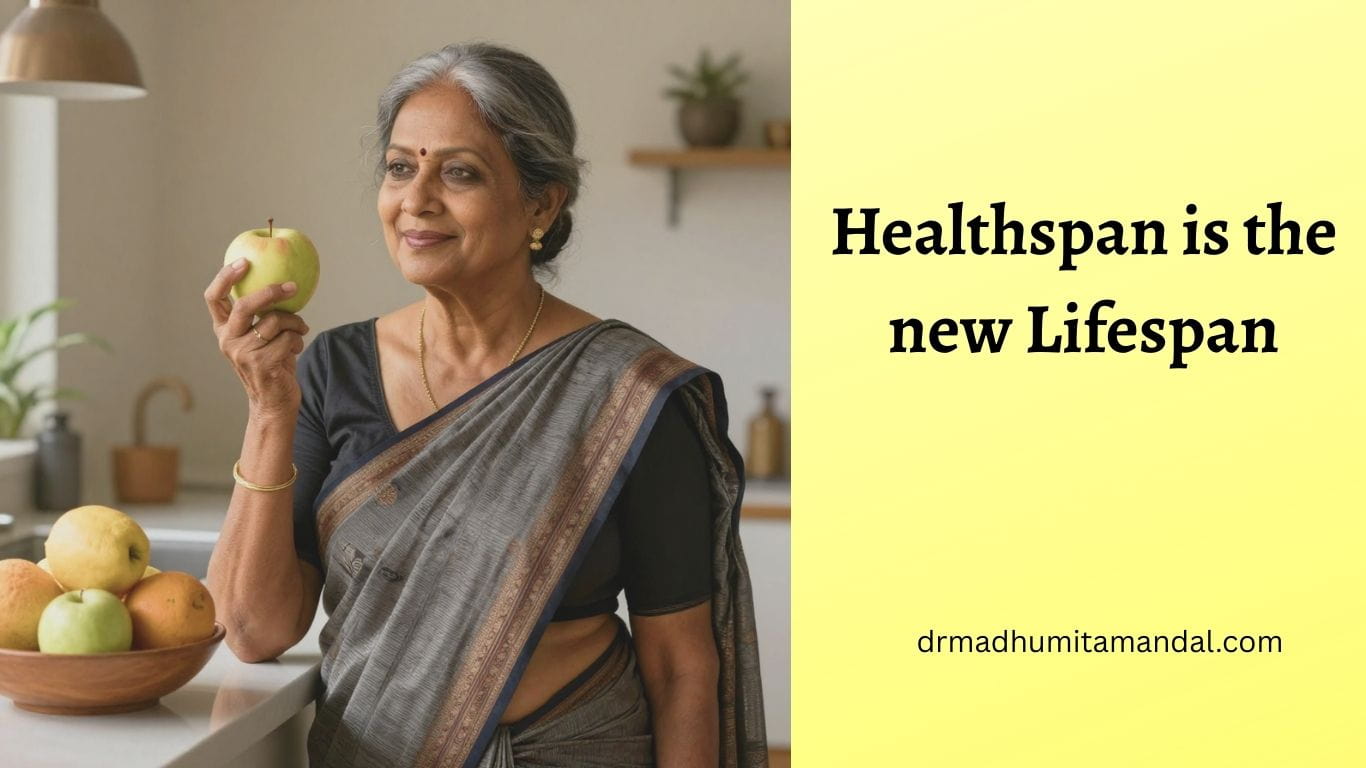
Lifespan is simple. It is the total number of years you live. Healthspan, on the other hand, is the number of years you live free from chronic disease, disability, and dependence. For centuries, humanity has chased one obsession with near-religious devotion: living longer. In ancient times, explorers searched for mythical fountains. Modern science mapped our DNA, cracked the genome, and extended average life expectancy further than any generation before us. And yet, quietly, a new question has risen—how long, more quality.
What’s the point of living longer if we aren’t living well?
My friend’s grandmother lived to be ninety-three. That’s what she told people—the number, like it’s a trophy, a victory against mortality itself. What she doesn’t mention is that she spent the last fifteen years of those ninety-three in a fog of prescriptions, the last eight unable to recognize her children, and the final three confined to a bed that became her entire universe.
She lived long. But the million dollar question is…did she live well?
This is the uncomfortable question that’s reshaping how we think about aging in the 21st century. We’ve become obsessed with lifespan—those raw numbers, those extra years, those medical interventions that keep our hearts beating and our lungs breathing. But somewhere in our quest to add years to life, we forgot to ask whether we’re adding life to those years.
Enter healthspan: the revolutionary yet oddly obvious idea that the quality of our years matters more than the quantity—the idea that the true measure of a good life is not the number of years you live, but the number of years you live healthy, active, independent, and fulfilled.
In today’s world of chronic stress, processed foods, sedentary jobs, and digital overload, healthspan is not a luxury. It is a necessity. Modern medicine has done an extraordinary job of extending lifespan. We can treat heart disease, manage diabetes, replace joints, and keep bodies alive far longer than nature once allowed. But often, those extra years come at a cost—years spent managing pain, fatigue, medications, and limitations.
Healthspan asks a different question:
How can we compress illness into the shortest possible time at the very end of life?
And the answer, overwhelmingly, points to three pillars:
diet, nutrition, and movement.
Why Healthspan Matters More Than Ever
We live in an age of paradox.
- Never before has food been so abundant—yet malnutrition is rampant.
- Never before has technology saved so much time—yet we barely move.
- Never before have we known so much about health—yet lifestyle diseases are exploding.
Heart disease, obesity, type 2 diabetes, hypertension, autoimmune disorders, and depression are no longer “old-age problems.” They are showing up in people’s 30s and 40s—sometimes earlier. The modern world has quietly engineered longer lives but weaker bodies.
Healthspan is our rebellion against that trend.
It’s about staying strong enough to climb stairs without pain, sharp enough to learn new things at 70, flexible enough to travel, dance, work, and live without constant fear of illness.
Food as medicine, Not Just Calories
For decades, we treated food like fuel—counting calories, grams, and macros as if the body were a simple machine.
But food is not just fuel.
Food is medicine.
Every bite sends signals to your genes, hormones, gut bacteria, immune system, and brain. It can either promote inflammation or reduce it. It can accelerate aging—or slow it down.
The Problem with Modern Diets
Ultra-processed foods dominate modern eating:
- Refined sugars
- Trans fats
- Artificial additives
- Excess salt
- Empty calories
These foods are engineered for pleasure and shelf life—not human biology. They spike blood sugar, disrupt insulin, damage gut health, and create chronic inflammation—the silent driver behind most age-related diseases.
The result?
We are overfed but undernourished.
Eating for Healthspan
A healthspan-focused diet isn’t about perfection. It’s about patterns.
Key principles include:
- Whole foods over processed foods
- Colorful plates (vegetables, fruits, herbs)
- High-quality proteins (legumes, eggs, fish, lean meats)
- Healthy fats (nuts, seeds, olive oil)
- Complex carbohydrates (whole grains, roots)
Traditional diets—Mediterranean, Indian home-cooked meals—share one thing in common: they evolved around real food, not factories.
Your body is literally made from what you eat. Every cell, every hormone, every neurotransmitter, every thought zipping through your brain—all of it built from the raw materials you shove into your mouth three to four times a day. You are, quite literally, what you eat.
Nutrition: Feeding the Body at the Cellular Level
Nutrition goes beyond eating enough—it’s about eating right.
Micronutrients like vitamins, minerals, antioxidants, and phytonutrients play a critical role in:
- Energy production
- Brain function
- Hormonal balance
- Bone strength
- Immune defense
Deficiencies may not show up immediately, but over time they erode healthspan quietly.
Protein: The Guardian of Aging Muscles
After the age of 30, we naturally lose muscle mass—a process called sarcopenia. Without adequate protein and strength training, this loss accelerates, leading to weakness, falls, and frailty later in life.
Protein is not just for athletes.
It is essential for:
- Muscle maintenance
- Enzyme production
- Immune resilience
- Recovery and repair
A healthspan mindset prioritizes sufficient protein daily, spread across meals.
Gut Health: The Hidden Control Center
Your gut is home to trillions of bacteria that influence digestion, immunity, mood, and even longevity. Fiber-rich foods—vegetables, fruits, whole grains, legumes—feed beneficial bacteria, while ultra-processed foods starve them.
A healthy gut equals:
- Better nutrient absorption
- Reduced inflammation
- Stronger immunity
- Improved mental health
In many ways, gut health is healthspan.
Movement: The Most Powerful Longevity Drug
If exercise came in a pill, it would be the most prescribed medication in the world.
Movement affects nearly every system in the body:
- Strengthens the heart
- Improves insulin sensitivity
- Preserves muscle and bone
- Enhances brain function
- Reduces stress and depression
And yet, modern life is designed to keep us still.
Exercise Is Not Optional Anymore
In previous generations, movement was built into life—walking, farming, etc. Today, we must choose movement deliberately.
Healthspan-focused movement includes:
- Resistance training/ Specific Strength training (2–3 times/week)
- Cardio (fast walking, cycling, swimming)
- Mobility and flexibility
- Balance exercises, especially as we age
You don’t need extreme workouts. Consistency matters more than intensity.
The goal is not to look fit.
The goal is to stay capable.
The Brain, Stress, and Modern Aging
Healthspan is not just physical—it is mental and emotional.
Chronic stress accelerates aging at a cellular level. It disrupts sleep, increases inflammation, and shortens telomeres—the protective caps on our DNA.
Practices that protect mental health include:
- Quality sleep
- Mindful eating
- Time in nature
- Social connection
- Purposeful work
A long life without clarity, joy, or connection is not a victory.
Aging Is Not the Enemy—Neglect Is
Aging is inevitable.
Decline is not.
The idea that growing older must mean growing weaker is outdated. Many people today are running marathons in their 60s, lifting weights in their 70s, and starting new careers in their 80s.
What separates them is not genetics alone—it is lifestyle.
Healthspan is built slowly, quietly, over decades.
Every meal is a vote.
Every walk counts.
Every night of good sleep compounds.
Healthspan Is a Daily Practice, not a Destination
There is no finish line.
No perfect diet.
No flawless routine.
Healthspan is about showing up for your body again and again—choosing nourishment over neglect, movement over stagnation, care over convenience.
It’s about designing a future where:
- You can play with your children and grandchildren
- You can travel without fear
- You can think clearly and move confidently
- You remain independent for as long as possible
Longevity without vitality is survival.
Longevity with vitality is living.
The goal is not to add years to life.
It is to add life to years.
And that journey begins—not someday—but with the very next choice you make.